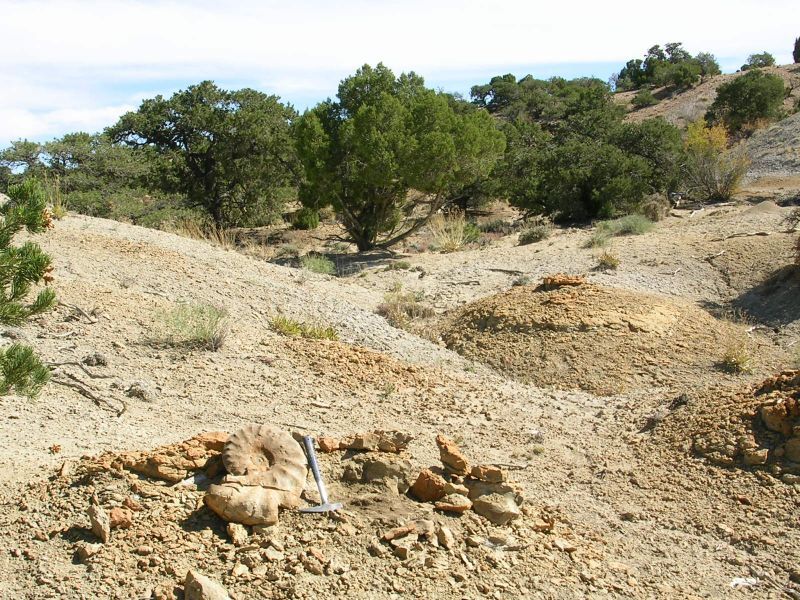
A large Placenticeras
pseudocostatum (Johnson) 1903,
at the outcrop
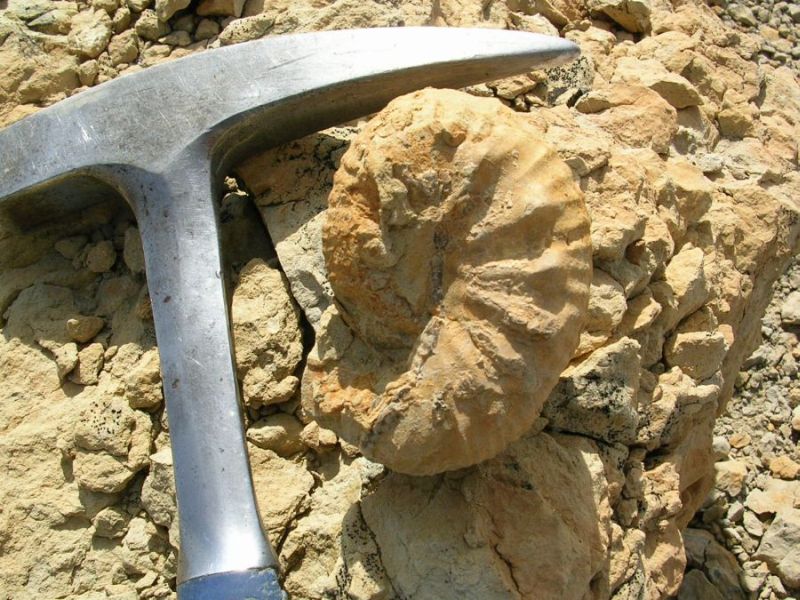
Clioscaphites vermiformis (Meek & Hayden) 1862
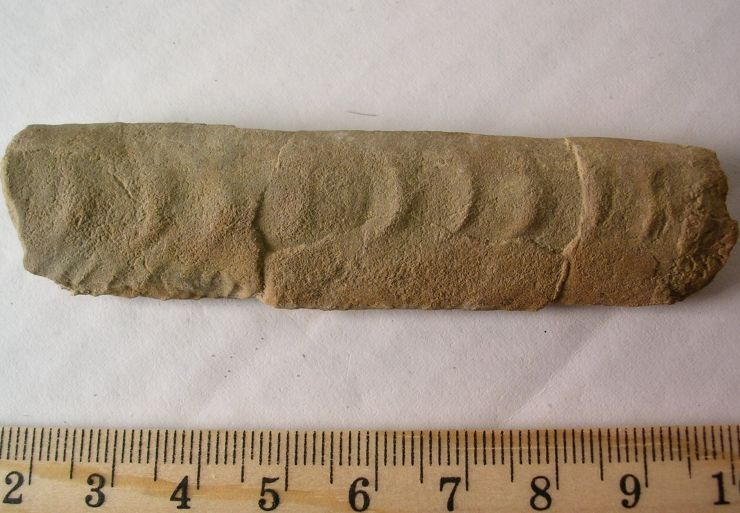
Baculites codyensis Reeside 1927
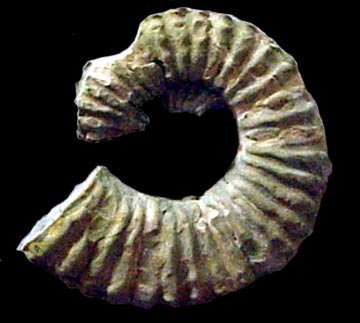
Texanites ?texanus (Roemer)
1852
217mm dia.

Placenticeras pseudocostatum (Johnson) 1903, ?male dimorph
formerly refered to P. guadalupae (Roemer) 1952
511mm diameter

Placenticeras pseudocostatum (Johnson) 1903, ?female dimorph
formerly refered to P. planum Hyatt 1903
530mm diameter
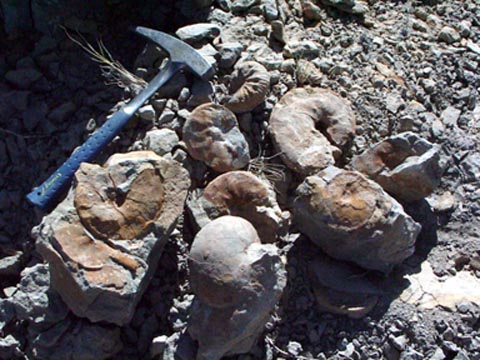
Typical fossil cephalopods from the Lower Emery
Sandstone and Garley Canyon Beds
Placenticeras pseudocostatum (Johnson)
1903,
is
the common ammonite
Clioscaphites vermiformis (Meek
& Hayden) 1862, Top Center, Eutrephoceras alcesense
Reeside 1927, Bottom Center
Baculites codyensis Reeside 1927,
Lower Left.
<back to Coniacian | Home | on to early Late Santonian>